
Reports > Energy
Future Business Strategy of Japanese General Trading Companies: Focus on CCUS
2024.07.31 Hang Cho

#Hashtag
-
Overview of CCUS
-
CCUS Business of Japanese General Trading Companies
-
Implications
Executive Summary
-
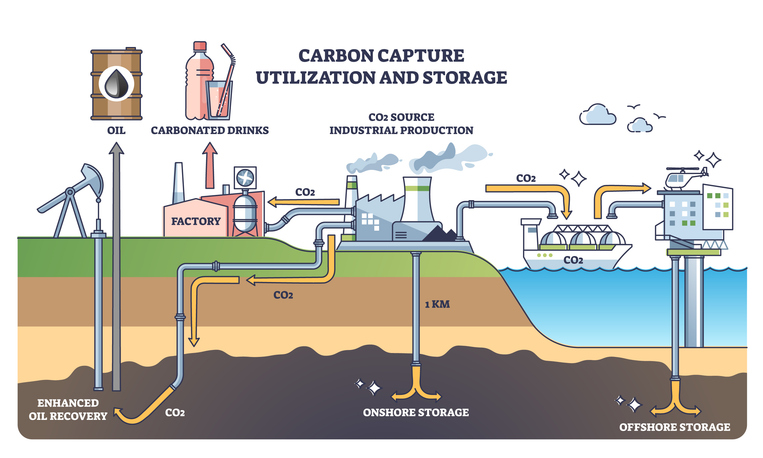
CCUS (Carbon Capture, Utilization & Storage) refers to the technology that captures CO2 and either utilizes it as useful material (CCU) or stores it deep underground (CCS) for permanent isolation, thus reducing CO2 concentration in the atmosphere.
-
As CCUS directly reduces large-scale greenhouse gas emissions, its importance is growing.
-
The market size is expected to grow at an annual rate of 17%, from 2.1 trillion KRW in 2020 to 4.7 trillion KRW in 2025, and is projected to reach 235 trillion KRW by 2050, the target year for carbon neutrality.
-
-
Japanese general trading companies are actively participating in various CCS projects, leveraging their oil and gas assets, and are considering commercialization.
-
Depleted oil and gas fields are commonly used as CO2 storage sites, and Japanese general trading companies hold significant oil and gas interests globally, giving them an advantage in promoting CCS projects.
-
Companies like Mitsubishi Corporation and Mitsui & Co., which excel in overseas resource development, are actively participating in projects such as the Tangguh CCS in Indonesia, the North West Shelf CCS in Australia, and the Hackberry Carbon Sequestration project in the U.S.
-
Additionally, Mitsui & Co. is directly operating a CCS project at its Waitsia gas field in Australia.
-
Marubeni Corporation is also involved in the CTSCo CCS project in Australia and the Meadowbrook CCS project in Canada.
-
-
In the CCU (Carbon Capture and Utilization) field, companies are advancing projects through partnerships with key players.
-
Mitsubishi Corporation established a CCU Task Force in 2021 to promote related projects, particularly in partnership with Blue Planet in the U.S. and Carbon Cure in Canada, where they are developing CO2-fixed concrete (branded as CO2-SUICOM).
-
Itochu Corporation is collaborating with Euglena Co., Ltd. in Japan on a project to cultivate euglena (a type of microalgae) using CO2 and heat emissions from thermal power plants.
-
-
Japanese general trading companies are highly active in CCUS due to the need to demonstrate their commitment to carbon reduction in their oil and gas field operations, which are increasingly targeted for environmental concerns.
-
This is why companies with relatively large oil and gas development operations, like Mitsubishi Corporation and Mitsui & Co., are particularly proactive in CCUS projects.
-